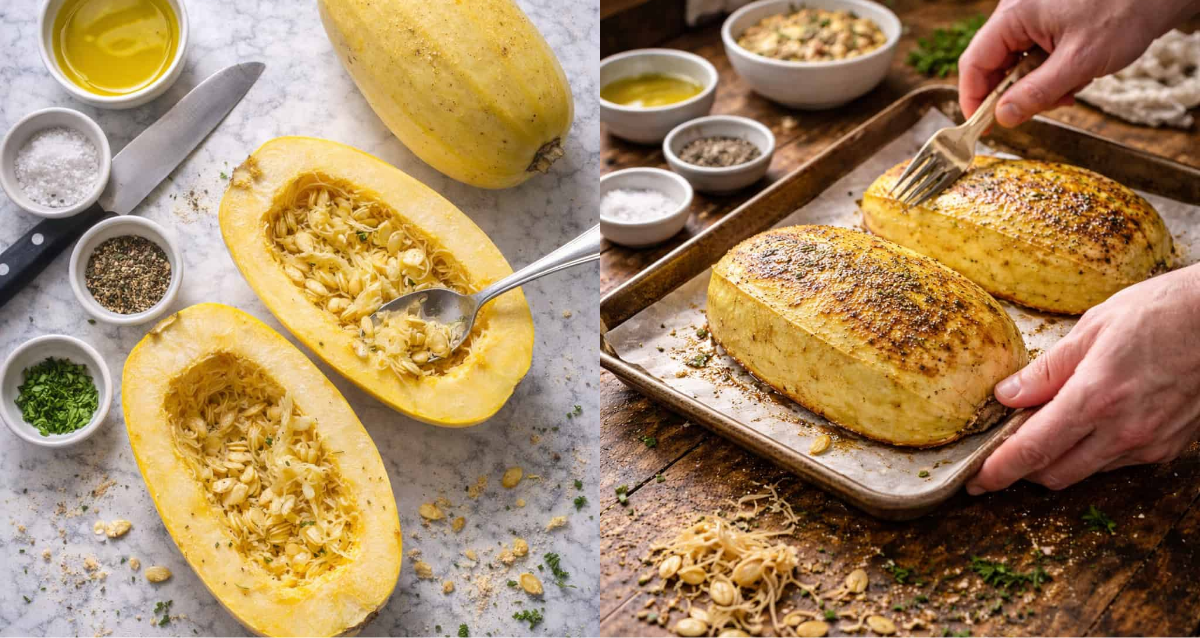
Learn how to cook the best roasted spaghetti squash in the oven with this easy step-by-step guide. Get perfectly tender, golden strands every time with simple tips that make a big difference.
You bought spaghetti squash… and now you’re not sure what to do.
Maybe you tried cooking it before and it turned out watery, mushy, or just bland.
That’s frustrating.
You want those perfect, tender strands that look like pasta—but taste rich and slightly sweet.
Good news.
This simple oven method gives you golden, soft, slightly crispy spaghetti squash every single time.
No guesswork. No soggy results. Just a clean, healthy base you can use for so many meals.
WHAT IS THIS RECIPE?
Roasted spaghetti squash is a healthy vegetable dish where the squash is baked in the oven until soft and tender.
When cooked, the inside naturally turns into thin strands that look like spaghetti.
That’s what makes it special.
It gives you a pasta-like texture without the carbs. It’s light, slightly sweet, and perfect for many different meals.
WHY YOU WILL LOVE THIS RECIPE
- Super easy method – Just cut, season, and roast
- Perfect texture every time – Soft inside with lightly golden edges
- Healthy and low carb – Great pasta alternative
- Budget-friendly – One squash feeds multiple servings
- Versatile – Works with many flavors and dishes
- Naturally gluten-free – Safe for many diets
- Minimal ingredients – Simple pantry staples only
Here’s where most people get this wrong…
They roast it the wrong way—and it turns out watery instead of perfectly tender.
INGREDIENTS
- 1 medium spaghetti squash (about 1–1.5 kg)
Choose one that feels firm and heavy for its size. - 2 tablespoons olive oil
Helps with roasting and adds a rich flavor. - 1/2 teaspoon salt
Brings out the natural sweetness. - 1/4 teaspoon black pepper
Adds mild heat and depth.
Optional:
- Garlic powder (1/2 teaspoon) for extra flavor
- Italian seasoning (1 teaspoon) for a herby taste
- Parmesan cheese for a savory finish
HOW TO MAKE (STEP-BY-STEP)
1. Cut the squash safely
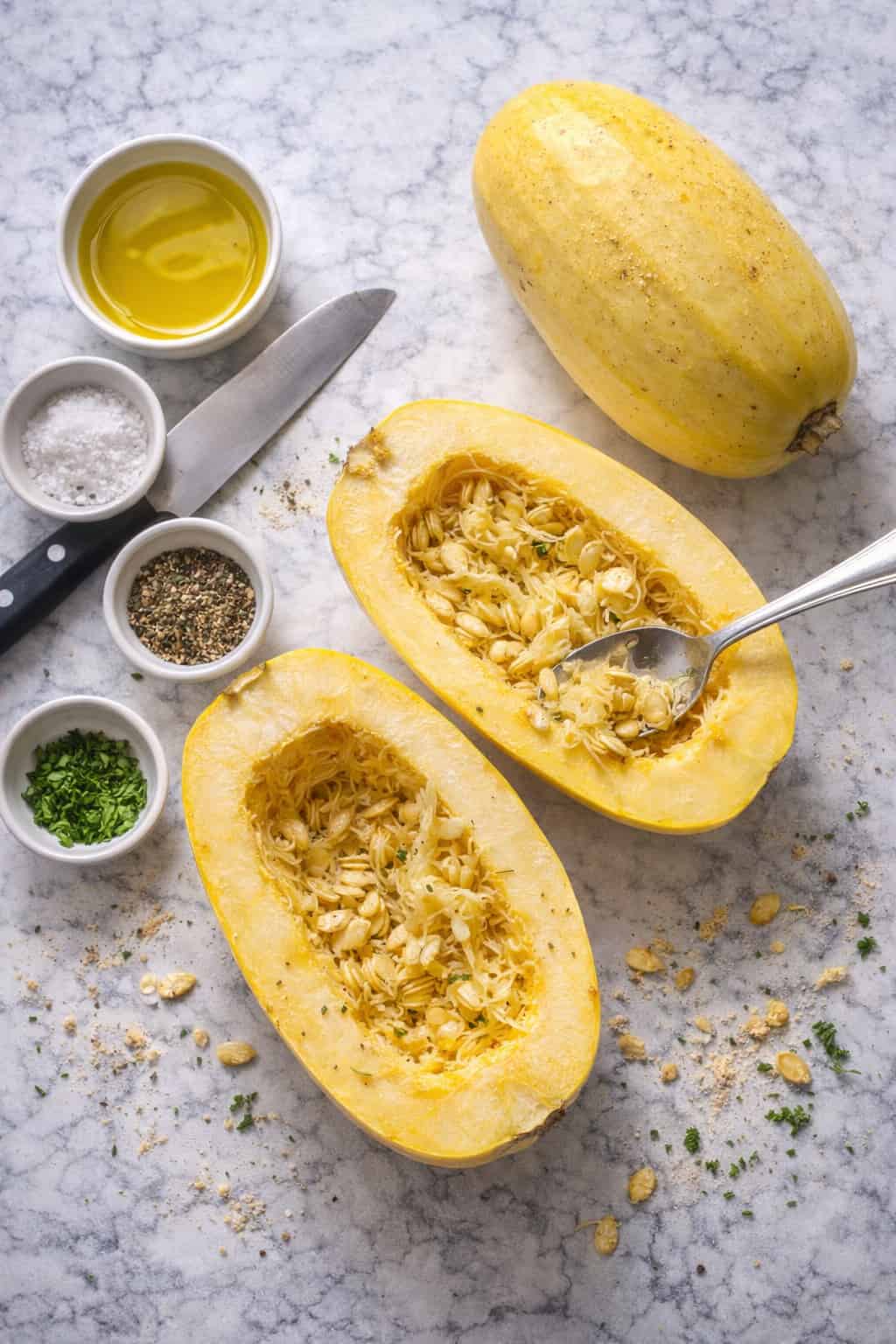
Start by placing the spaghetti squash on a stable cutting board. Use a sharp knife and carefully cut it in half lengthwise. Take your time here because the skin is tough. If it’s too hard, microwave it for 2–3 minutes to soften slightly. Once cut, scoop out the seeds using a spoon. The inside should look clean and slightly firm. This step sets the base for even cooking later.
2. Prepare the surface
Preheat your oven to 200°C (400°F). Line a baking tray with parchment paper. Place the squash halves cut-side up. Drizzle olive oil over the surface and use your hands or a brush to spread it evenly. Make sure every part is lightly coated. This helps the squash roast instead of steam. Sprinkle salt and pepper evenly across the surface.
3. Flip and position
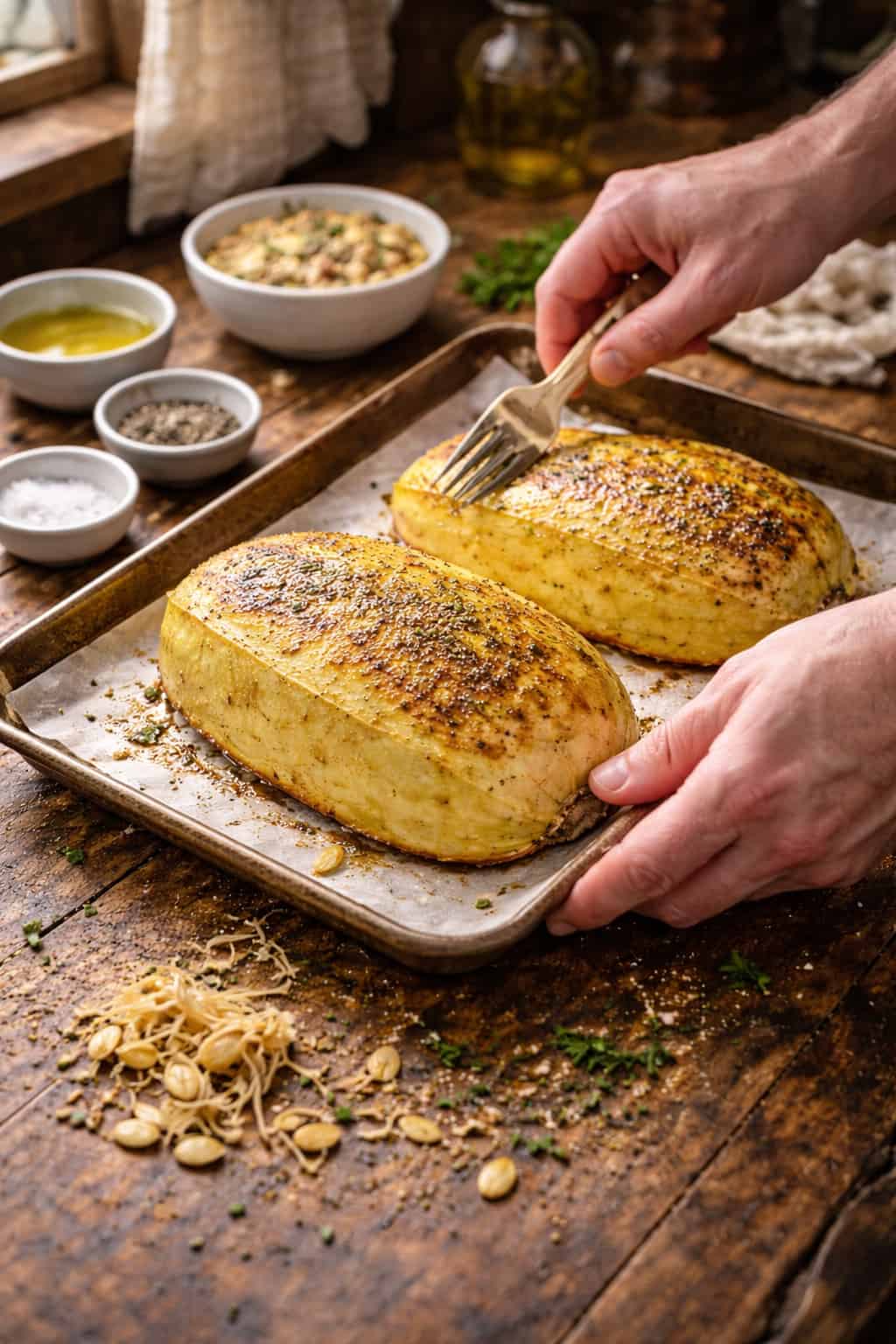
Turn the squash halves cut-side down on the tray. This is very important. It helps lock in moisture while still allowing the edges to caramelize slightly. The skin should be facing up. Press lightly so the edges touch the tray. This creates a better roast and deeper flavor.
4. Roast to perfection
Place the tray in the oven and roast for 35–45 minutes. The squash should become tender when pressed. The edges touching the tray will turn slightly golden. This is where the flavor builds. Do not rush this step. If undercooked, the strands will be hard. If overcooked, they become mushy.
5. Check doneness
Carefully remove the tray and flip one half over. Use a fork to gently scrape the inside. The flesh should pull away easily into soft, spaghetti-like strands. It should look light, fluffy, and slightly glossy. If it’s still firm, return to the oven for a few more minutes.
6. Create the strands
Once fully cooked, use a fork to scrape all the flesh into strands. Work from the edges toward the center. The texture should feel soft, tender, and slightly firm—not watery. Let it sit for a few minutes to release extra steam. This helps keep it from becoming soggy.
This small trick makes a huge difference…
Roasting cut-side down gives you better texture and flavor instead of watery squash.
PRO TIPS
- Always cut lengthwise for longer strands.
- Roast cut-side down for best texture.
- Do not overcrowd the tray for even roasting.
- Use high heat for better caramelization.
- Let squash rest before scraping strands.
- Add seasoning after roasting for a stronger flavor.
- Avoid too much oil to prevent sogginess.
- Use a fork gently to keep strands intact.
- Store extra strands for later meals easily.
COMMON MISTAKES TO AVOID
- Cutting the wrong direction – shorter strands
- Roasting cut-side up – leads to watery texture
- Overcooking – makes mushy strands
- Undercooking – strands stay hard
- Skipping oil – reduces flavor and texture
- Not draining moisture – makes it soggy
- Overcrowding pan – uneven cooking
VARIATIONS / CUSTOMIZATION IDEAS
- High protein version – Add grilled chicken or tuna
- Vegan version – Toss with olive oil and herbs
- Quick version – Microwave first, then roast briefly
- Cheesy version – Add parmesan or mozzarella
- Spicy version – Add chili flakes or hot sauce
Now let’s make it even better…
SERVING IDEAS
Serve it like pasta with your favorite sauce. Add garlic butter and herbs for a simple side dish. Use it as a base for bowls with protein and veggies. It’s also great as a light dinner or meal prep option.
STORAGE & REHEATING
Store cooked squash in an airtight container in the fridge for up to 4 days. Reheat in a pan over medium heat or microwave for 1–2 minutes. Do not overheat to avoid soggy texture.
NUTRITION FACTS (Approximate)
Calories: 80
Carbs: 7g net carbs
Fiber: 2g
Fat: 4g
QUICK SUMMARY (SCANNABLE)
- Easy oven method
- Perfect tender strands
- Healthy low carb option
- Simple ingredients
- Great for many meals
WHEN TO EAT THIS
Perfect for busy weeknights when you need something easy. Great as a healthy pasta swap for dinner. Ideal after workouts or when craving comfort food without heavy carbs.
Light, simple, and satisfying every time.
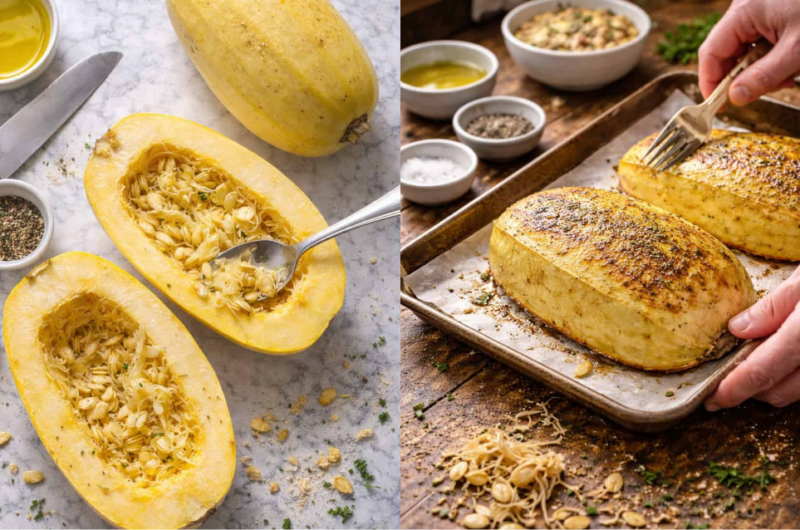
The BEST Roasted Spaghetti Squash (Perfectly Tender Every Time!)
Course: Uncategorized4
servings30
minutes40
minutes80
kcalIngredients
1 medium spaghetti squash (about 1–1.5 kg)
2 tablespoons olive oil
1/2 teaspoon salt
1/4 teaspoon black pepper
Directions
- Start by placing the spaghetti squash on a stable cutting board. Use a sharp knife and carefully cut it in half lengthwise. Take your time here because the skin is tough. If it’s too hard, microwave it for 2–3 minutes to soften slightly. Once cut, scoop out the seeds using a spoon. The inside should look clean and slightly firm. This step sets the base for even cooking later.
- Preheat your oven to 200°C (400°F). Line a baking tray with parchment paper. Place the squash halves cut-side up. Drizzle olive oil over the surface and use your hands or a brush to spread it evenly. Make sure every part is lightly coated. This helps the squash roast instead of steam. Sprinkle salt and pepper evenly across the surface.
- Turn the squash halves cut-side down on the tray. This is very important. It helps lock in moisture while still allowing the edges to caramelize slightly. The skin should be facing up. Press lightly so the edges touch the tray. This creates a better roast and deeper flavor.
- Place the tray in the oven and roast for 35–45 minutes. The squash should become tender when pressed. The edges touching the tray will turn slightly golden. This is where the flavor builds. Do not rush this step. If undercooked, the strands will be hard. If overcooked, they become mushy.
- Carefully remove the tray and flip one half over. Use a fork to gently scrape the inside. The flesh should pull away easily into soft, spaghetti-like strands. It should look light, fluffy, and slightly glossy. If it’s still firm, return to the oven for a few more minutes.
- Once fully cooked, use a fork to scrape all the flesh into strands. Work from the edges toward the center. The texture should feel soft, tender, and slightly firm—not watery. Let it sit for a few minutes to release extra steam. This helps keep it from becoming soggy.
Notes
- Always cut lengthwise for longer strands.
- Use high heat for better caramelization.
- Roasting cut-side up – leads to watery texture
- Skipping oil – reduces flavor and texture